
Dirty floors can quietly drive customers away. According to a Harris Poll survey commissioned by Cintas, about 72 percent of diners say dirty or slippery floors would discourage them from returning to a restaurant. Floors may seem like background scenery, but customers notice them quickly, sometimes before the menu even arrives. A sticky step or greasy tile sends a clear message, and it rarely says “trust the kitchen.”
Restaurant owners understand this reality better than most. Behind the scenes, keeping floors clean takes serious work, especially in busy cafés where spills and grease build up within hours. Many businesses turn to professional services such as tile cleaners Brisbane to maintain sanitary kitchen and dining areas. Reliable cleaning services help restaurants stay compliant with health standards while preventing the slow buildup of grime that regular mopping often misses.
Why Floor Hygiene Matters for Food Safety
 Food safety discussions usually focus on ingredients, cooking temperatures, and cross-contamination. Floors rarely make the headline, yet they are part of the sanitation chain. Health agencies such as the U.S. Food and Drug Administration emphasize that food facilities must maintain clean, easily washable surfaces throughout the premises.
Here’s the thing many diners never see. Kitchen floors collect more than water spills. Bits of food, grease splatter, and even bacteria hitch rides on shoes and wheels from carts. Over time, these particles settle into grout lines or textured tiles.
A veteran chef once joked that the floor of a busy kitchen tells the real story of service. After a hectic dinner rush, the tiles resemble a timeline of everything that happened that night. Sauce drops. Flour dust. A tiny scatter of chopped herbs. It all lands somewhere.
If those surfaces are not cleaned thoroughly, contamination risks increase. Slippery floors also become safety hazards for staff carrying heavy trays or hot pans. Clean floors support both hygiene and workplace safety.
The Hidden Risk of Grease and Grout
Grease buildup is the silent villain of restaurant floors. Unlike visible spills, grease seeps into porous grout and textured tiles. Standard mops often smear it around rather than remove it.
This leads to two problems.
- Floors become sticky or slippery, which increases the chance of accidents.
- Bacteria and odors settle into grout lines where regular cleaning cannot reach.
Anyone who has worked in hospitality knows the smell of old grease. It lingers like a stubborn ghost near the fryer station. Eventually it travels beyond the kitchen, creeping into dining spaces.
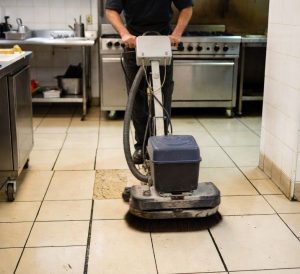
Professional restaurant maintenance often includes deep tile and grout cleaning to break down these layers. Many establishments schedule specialized floor sanitation a few times each year, especially in high traffic kitchens. In busy venues, commercial floor sanitation from experienced tile cleaning professionals in Brisbane becomes part of routine maintenance rather than a last-minute fix.
Clean Floors Shape Customer Trust
Diners form impressions quickly. The floor is one of the largest surfaces in any restaurant, and customers subconsciously scan it while walking to their table. Clean design also plays a role in how people perceive hygiene. Restaurant kitchens and dining areas are carefully planned environments where layout, cabinetry, and service spaces all affect workflow and cleanliness. A closer look at the mix of kitchen cabinets and food drink spaces shows how thoughtful design supports both efficiency and presentation, reinforcing why spotless floors matter just as much as the food being served.
If it looks spotless, people assume the kitchen operates with the same discipline. If it looks greasy or dull, doubts creep in.
Industry research repeatedly shows that cleanliness plays a huge role in customer loyalty. Studies cited by hospitality organizations reveal that many diners associate the condition of visible spaces like restrooms and floors with how sanitary the kitchen might be.
Think about the last time you walked into a café with polished tiles and bright lighting. There’s a small moment of relief, almost a silent nod that says, “Okay, this place cares.”
Customers rarely say it out loud, but they notice.
Knowing When to Schedule Professional Cleaning
Restaurants operate in cycles. Breakfast rush, lunch crowd, afternoon lull, dinner service. Cleaning schedules should follow the same rhythm.
Daily mopping handles surface mess, but deep sanitation requires more specialized equipment. Pressure extraction machines, commercial degreasers, and grout treatments remove residue trapped beneath the surface.
Most hospitality maintenance experts recommend scheduling professional tile cleaning every three to six months. Kitchens with heavy frying or high foot traffic may need service more frequently.
Routine inspections help too. Managers often check grout color, floor texture, and slip resistance as early signs of buildup. If the tiles begin to look darker or feel sticky, it is usually time to call experienced tile cleaners Brisbane who understand commercial kitchen conditions.
Clean Floors, Stronger Reputation
Restaurants succeed on small details. Flavor matters. Service matters. But cleanliness ties everything together.
A spotless floor supports food safety, protects staff from slips, and quietly reassures customers that the entire operation runs with care. It signals discipline. It signals professionalism.
And in a competitive food industry where diners have endless choices, that quiet signal can mean the difference between a one-time visit and a loyal regular.
Floor hygiene may start beneath everyone’s feet, but its impact reaches all the way to a restaurant’s reputation. That’s why many hospitality operators treat partnerships with trusted tile cleaners Brisbane as an essential part of maintaining both safety and customer confidence.
After all, diners judge restaurants in seconds. Sometimes it only takes one glance at the floor.
Tags: restaurant hygiene, food safety standards, commercial cleaning, tile and grout cleaning, hospitality maintenance
Image Prompt Suggestions:
1. Professional cleaner deep-cleaning restaurant kitchen tiles with commercial floor machine
2. Close-up of greasy restaurant floor tiles before and after grout cleaning
3. Busy restaurant kitchen with staff working while spotless tiled floors shine
4. Café dining area with polished tile flooring and natural lighting
5. Cleaning professional scrubbing grout lines in a commercial kitchen