

Flooding can create an immediate food safety problem inside a commercial kitchen. The U.S. Food and Drug Administration (FDA) Food Code identifies a flood, sewage backup, or extended loss of water or electrical service as circumstances that may create an imminent health hazard, potentially requiring a food establishment to discontinue affected operations and notify its regulatory authority.
For restaurant owners, caterers, hotels, and institutional kitchens, the problem extends beyond removing visible water. Moisture may reach food storage areas, equipment, flooring, walls, electrical systems, and preparation surfaces. Services like WaterDamage Georgia illustrate the type of water-damage response available when businesses face these incidents. The larger operational challenge is determining what has been contaminated, what can be restored, and when food preparation can safely resume.
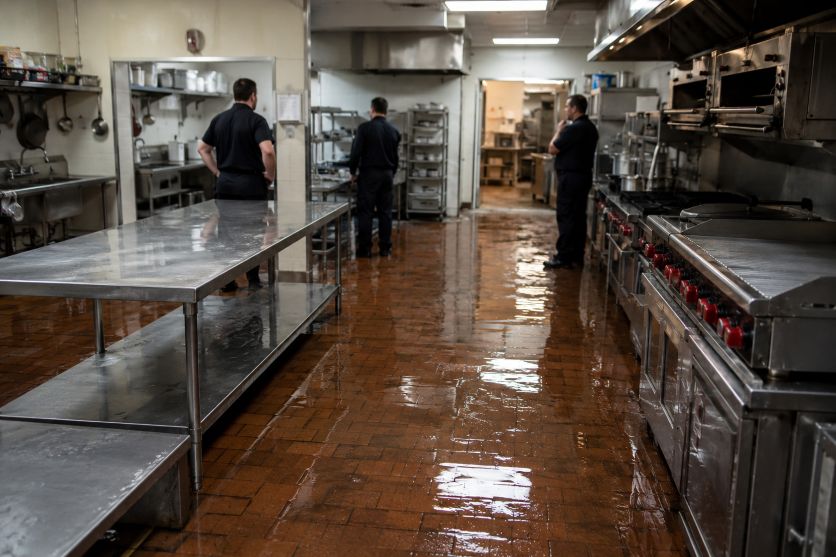
Why a Flooded Kitchen May Need to Shut Down
A commercial kitchen depends on controlled conditions. Employees need potable water, functioning refrigeration, safe equipment, clean utensils, sanitary food-contact surfaces, and reliable waste disposal. Water intrusion can interfere with several of these systems at the same time.
The FDA explains that its Food Code serves as a model for state, local, tribal, and territorial authorities regulating restaurants and other retail food establishments. Although individual requirements vary by jurisdiction, the model code provides a useful framework for understanding why flooding can lead to an operational shutdown. When an imminent health hazard exists, affected operations generally cannot simply continue while cleanup takes place.
The source of the water matters as well. A small leak from a known clean-water source presents different concerns from floodwater or sewage. The Centers for Disease Control and Prevention (CDC) warns that floodwater can contain bacteria as well as sewage, agricultural waste, and industrial contaminants. That uncertainty makes careful assessment essential before employees begin cleaning or handling exposed food and equipment.
Step One: Stop Operations and Assess the Damage
Once significant water intrusion is discovered, managers need to isolate affected areas and determine where the water originated and how far it traveled. Food, packaging, preparation surfaces, storage racks, refrigerators, dishwashing equipment, walls, flooring, and utility systems may all require inspection.
Electrical and structural hazards also have to be considered before cleanup begins. Standing water around powered kitchen equipment can make the environment unsafe for employees. The immediate objective is therefore containment and assessment, rather than rushing to restore normal service.
Step Two: Decide What Can Be Saved
Water-damaged materials do not all respond to cleaning in the same way. Smooth, nonporous equipment may sometimes be cleaned and sanitized, while absorbent materials can retain moisture or contamination.
Guidance from the FDA for restaurants reopening after hurricanes and floods recommends disposing of contaminated or spoiled food and carefully evaluating affected equipment. Refrigerated storage units, filters, ice machines, beverage systems, sinks, ventilation components, and utensils may require specific cleaning, replacement, flushing, or sanitation procedures before returning to service.
This sorting stage can affect how quickly a business reopens. Trying to preserve unsuitable materials may extend the cleanup process, while discarding equipment unnecessarily can increase recovery costs. Documentation of damaged inventory and equipment can therefore help owners make more organized decisions while also supporting insurance records where applicable.
Step Three: Remove Water and Dry the Building
Visible standing water is only part of the moisture problem. Water can migrate beneath flooring, behind wall finishes, into cabinets, and through other building materials. These areas may remain damp after the surface appears dry.
The U.S. Environmental Protection Agency (EPA) advises removing standing water promptly and drying wet buildings and materials. Its guidance notes that microorganisms can continue growing while materials remain wet and indoor humidity stays high. Materials that cannot be thoroughly cleaned and dried may need to be removed.
Speed matters. The CDC recommends cleaning and drying wet materials within roughly 24 to 48 hours when possible to reduce the opportunity for mold growth. The EPA similarly notes that professional water-damage and mold-remediation firms commonly use dehumidifiers, high-capacity fans, and other drying equipment to accelerate moisture removal.
Step Four: Cleaning Is Different From Sanitizing
A surface that looks clean is not automatically ready for food preparation. Physical soil and residue first need to be removed, after which appropriate sanitation or decontamination procedures can address microorganisms that may remain. This is especially important at floor level, where floodwater can spread residue across tiles, grout lines, and hard-to-reach areas. Maintaining proper restaurant floor hygiene therefore becomes an important part of restoring the kitchen environment before normal operations resume.
The FDA provides detailed post-flood recommendations for food establishments, including washing, rinsing, and sanitizing salvageable utensils and equipment. Its guidance also covers refrigerators, dishwashers, ice machines, water lines, filters, sinks, and other components that can be overlooked when attention is focused mainly on floors and walls.
Food-contact surfaces deserve particular attention because they provide a direct pathway between contamination and prepared meals. Sanitizers should be used at appropriate concentrations and according to product instructions and applicable local requirements.
What Has to Happen Before the Kitchen Reopens?
Reopening should be treated as the final stage of recovery, rather than the moment when the visible water disappears. Managers need confidence that the source of intrusion has been corrected, contaminated materials have been removed, structural areas are dry, and kitchen equipment is operating correctly.
Water and food-contact systems also need to be safe. The FDA recommends cleaning and sanitizing affected sinks and equipment, replacing certain contaminated filters, flushing water lines, and verifying that equipment maintains its operational integrity after flooding. Local health authorities may impose additional requirements depending on the incident and jurisdiction.
Planning for the Next Water Emergency
A burst pipe or severe storm can interrupt service with little warning, but commercial kitchens can prepare for the operational consequences. Emergency procedures can identify who shuts down utilities, who contacts health authorities, how exposed inventory is documented, and which contractors or specialists should be contacted.
The broader lesson is that water intrusion is both a building problem and a food safety problem. Successful recovery follows a sequence: control the hazard, inspect the affected environment, remove water, dry hidden moisture, clean and sanitize appropriate surfaces, verify equipment, and satisfy applicable regulatory requirements. When those steps are planned before an emergency occurs, kitchen operators are better positioned to make careful decisions and return to service without allowing reopening pressure to override food safety.